Ancient Hoplites

Ancient Hoplites

Wednesday, May 1, 2013

The Spartan Economy: The Role of the Perioikoi

It is one of the ironies of recorded history that we generally know much more about the tiny, ruling elite in any society than about the masses that actually composed it. Thus we know about the lives and loves of medieval kings, but little about the peasants that represented more than 90% of their subjects. Likewise, Lacedaemonian history is dominated by the tiny class of Spartiates, albeit a great deal has also been written about the (allegedly unjustly) oppressed helots.  The segment of Lacedaemonian society that has received the least scholarly attention is the “middle class” – the perioikoi.
The lack of modern literature on the perioikoi is undoubtedly due to the lack of historical and archeological information about this segment of Spartan society. The fact is, we know almost nothing about them -- not their origins, their history, their laws, or their legal relationship with the ruling Spartiates and subordinate helots.
The lack of archeological finds has led some historians to hypothesize that they were an essentially rural population, hardly better off than the helots themselves.  Yet the very fact that they provided hoplites in at least equal numbers as the Spartans casts serious doubt on this thesis.  I would also note that the archeological finds in Sparta itself hardly reflect the might and wealth that we know Sparta enjoyed. For whatever reasons, the existing archeological evidence from Lacedaemon is an incomplete, indeed woefully inadequate, reflection of the society that inhabited the region in the 7th to 3rd Centuries BC.
John Chadwick in “The Mycenaean World" claims that the Mycenaeans found a native population on the Peloponnese, which they subjugated.  When the Dorians invaded, they conquered the remnants of the Mycenaeans.  This sequence of events might explain the three class system in Lacedaemon: the helots were the original inhabitants already reduced to serf-like status by the Mycenaeans, and the Mycenaeans became the perioikoi after the Dorian invasion.  All three groups were essentially ethnically distinct and status depended on who had conquered whom.  The situation appears to have been stable until the Spartans invaded Messenia and subdued another Dorian population. But all this is speculation.
Yet, while we know almost nothing about the perioikoi, we can infer a great deal. We know, for example, that in the later years of the Peloponnesian war, perioikoi hoplites were fully integrated with Spartan units – and that implies comparable levels of training, equipment and above all trust.  While the enemies of Sparta (and modern commentators) make much of the hostility of the helots to Spartiate rule, the loyalty of the perioikoi is rarely questioned – or mentioned, despite its significance.
 
Furthermore, we know that Sparta had a fleet but that Spartiates had virtually no opportunity to gain the extremely complex knowledge necessary to build and sail ancient vessels. We know that Spartiates were prohibited from pursuing any profession other than that of arms (and civic administration – see my earlier entry "Not Just Soldiers"), but Lacedaemon had extensive international trade. We know further that Lacedaemon produced and exported timber, pottery, and bronze works. It had mines and quarries, and, of course, every kind of handcraft necessary to daily life in the ancient world from carpentry and metal working to tanning and basket-weaving. If the Spartiates were prohibited from performing these tasks and the helots were working the land, who provided the manpower and the know-how for all these various industries?
The logical answer is the perioikoi. Furthermore, by ascribing to the perioikoi these various urban professions generally held by citizens in other Greek cities, we quickly see a way in which the perioikoi could have been both integrated and co-opted into Spartan society despite their undeniable second-class political status.  The Perioikoi had no voice in Spartan politics and yet they were expected to risk their lives side-by-side with the Spartiates. It hardly seems credible that they would have accepted this situation for long – particularly in the bad years of the Peloponnesian War – if they had not enjoyed other benefits.
The financial benefits of a monopoly on industry and trade throughout the rich territory of Lacedaemon would have been such an incentive. The very restrictive nature of Spartan citizenship, which confined Spartiates to the army and civic duties, opened immense opportunities for the perioikoi to enrich themselves.  Even if completely excluded from land-holding (which to my knowledge they were not, but which might have been the case when the Spartiate population was expanding in the archaic era), there would still have been ample opportunities to not only earn a living but make a fortune with industry and trade. The experience of other societies shows that a manufacturing and trading middle-class can indeed prosper even when politically disenfranchised (see, for example, Medieval France).  This, I believe, is the key to perioikoi loyalty and the essential character of the Spartiate-Perioikoi contract. 
While Spartiates reserved political power to themselves and evolved a culture that disdained the public display of wealth; the perioikoi traded political enfranchisement for the dual benefits of economic freedom and security.  Behind the shields of Sparta’s incomparable army, the perioikoi were free to enrich themselves for generations.  Only after Sparta fell into decline and her citizen ranks grew too thin to guarantee the protection of Lacedaemon did the Spartiate-Perioikoi contract begin to unravel. The decline of Spartiate population forced an increasing dependence on perioikoi troops, which put perioikoi at ever greater risk. As long as Sparta was winning wars, that might have been acceptable, but once Sparta was defeated at Leuktra the perpetual disenfranchisement of the periokoi became untenable.  Throughout the archaic period, however, the division of labor between Spartiate and perioikoi appears to have worked admirably.
 

Sunday, April 7, 2013

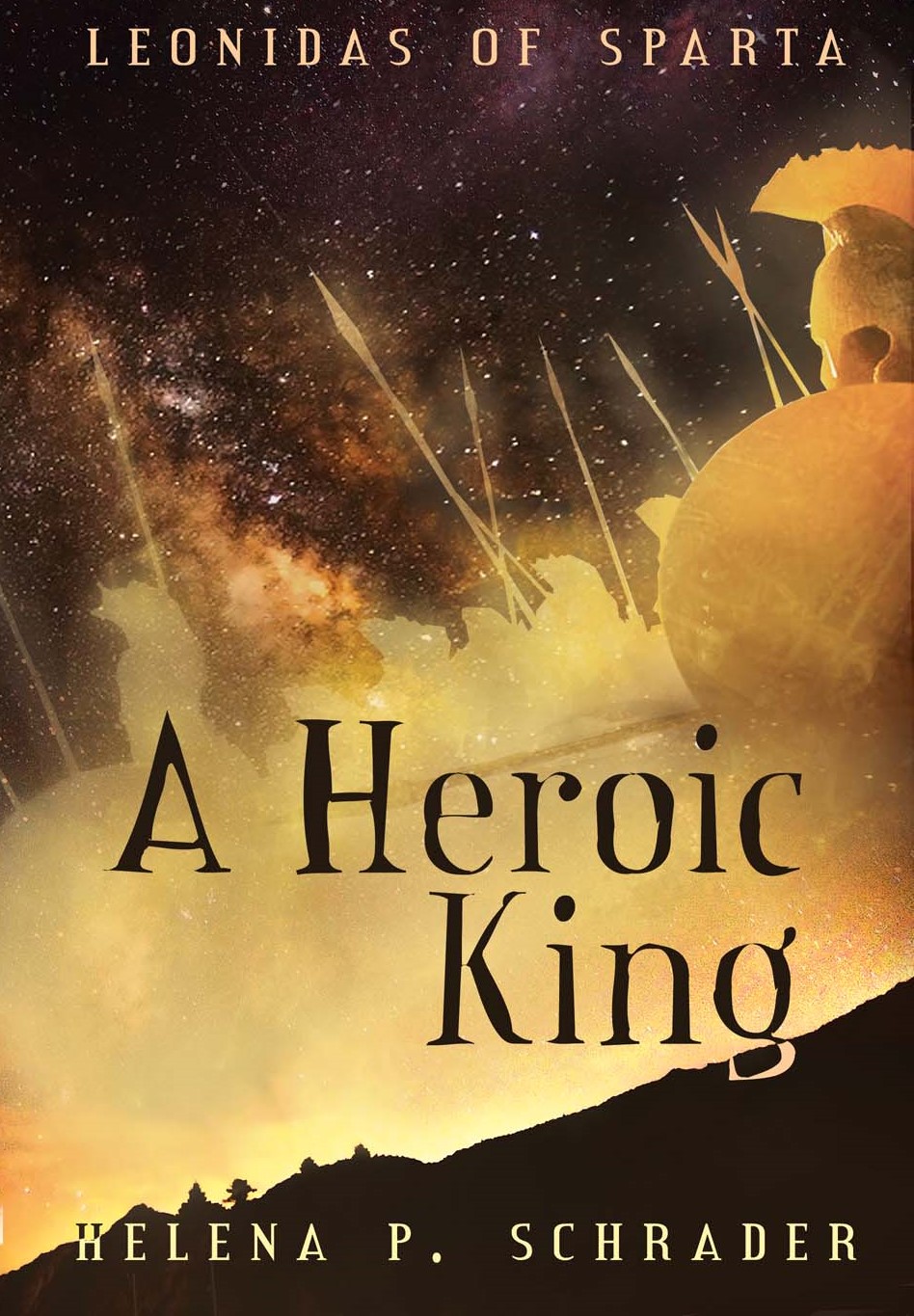
New Reviews of the Leonidas Trilogy

5.0 out of 5 stars Beautifully written!, March 20, 2013
By
Amazon Verified Purchase(What's this?)
This review is from: Leonidas of Sparta: A Heroic King (Kindle Edition)
Beautifully written with an attention to historical detail and accuracy. A unique insight into Spartan society. The final battle scene is also gripping. I couldn't put the book down.

4.0 out of 5 stars Very good, but just a trifle constrained by the rich ancient sources, January 6, 2013
Amazon Verified Purchase(What's this?)
This review is from: Leonidas of Sparta: A Heroic King (Kindle Edition)
In writing the third volume of her Leonidas trilogy, Helena Schrader finds herself, paradoxically, to some degree constrained by the wealth of ancient sources at her disposal---Herodotus, Thucydides, and Plutarch above all (the last, particularly, in his sayings of the Spartans and Spartan women). Schrader more or less has to get all of this evidence in somehow---it wouldn't do to leave out a real live attested utterance of Leonidas or Gorgo---so she finds herself with the task of devising situations to account for these apothegms, to some degree to the detriment of her narrative flow. Sometimes, as we all know, less is more and more is less, even when historical (or quasi- or putatively historical) sources are concerned. That said, though, she does her usual good job. As a confessed Spartanophile---I just finished teaching a course on Athens and Sparta---I find her vision of Sparta, by and large, and, indeed, more than by and large, persuasive. I think she gets the tone of things pretty much right. The glittering reputation of Sparta was not based on nothing, and it has long been to me very striking that, so far as we can tell, for virtually all of the late 500s and for most of the 400s as well the other poleis of Greece very clearly and very strongly favored and respected Sparta more than they did Athens. From a contemporary vantage point that seems almost inconceivable, but Schrader does a fine job of suggesting why it may have been---and justly been---so.


5.0 out of 5 stars This is a Great Read, March 4, 2013
Amazon Verified Purchase(What's this?)
This series is very well put together and enjoyable to read. The book works well as part of the series or it can stand alone . The character development and history capture a vivid picture of Spartan life. I am looking forward to the next book in the series.

5.0 out of 5 stars Wonderful Book! Wonderful Series!!!, December 18, 2012
By
srh2767 "Steven" (Trenton Illinois) - See all my reviews
Amazon Verified Purchase(What's this?)
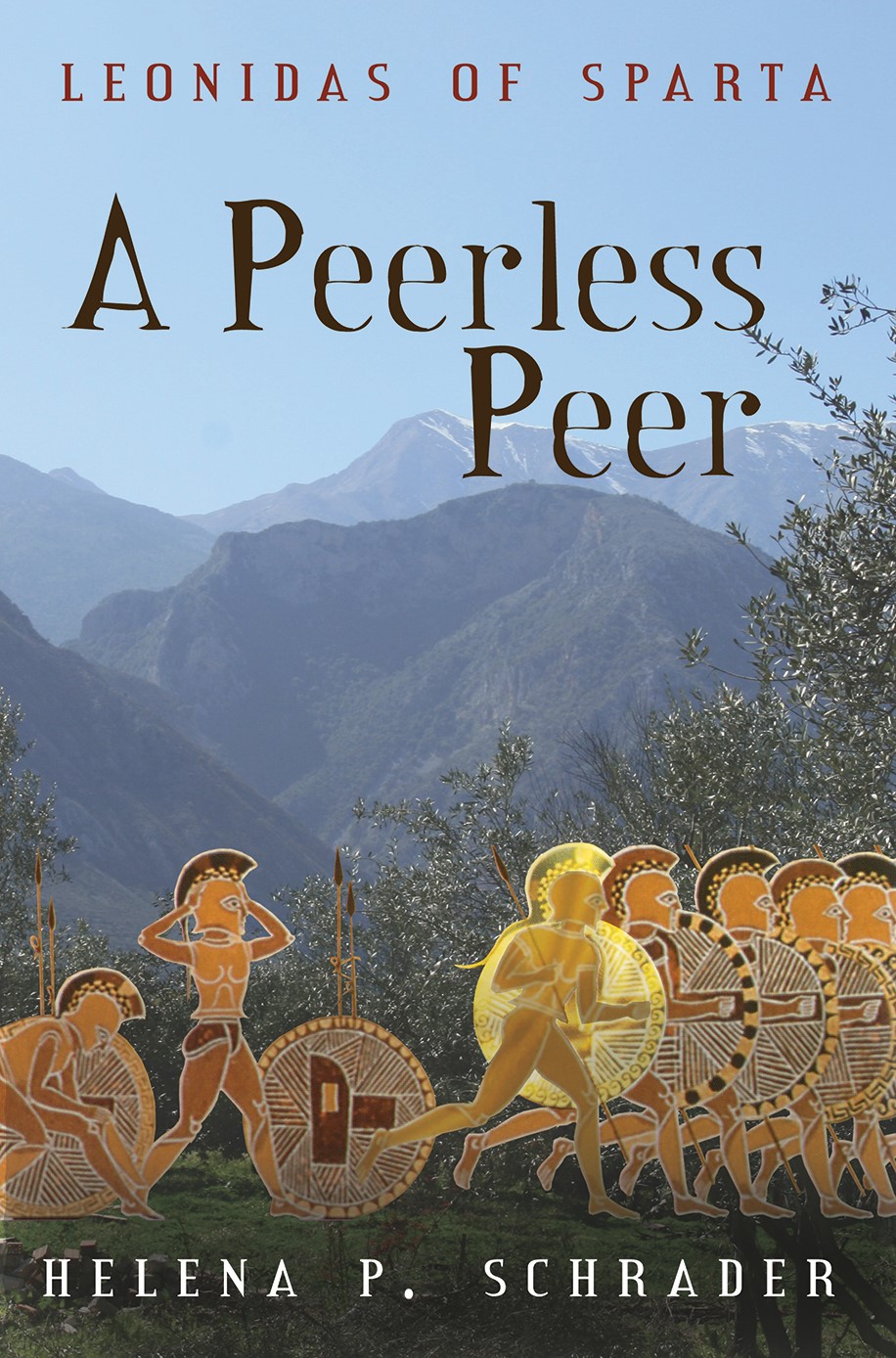
This review is from: Leonidas of Sparta: A Peerless Peer (Paperback)
This book is the second in the series. Dr Schrader does a wonderful job telling the story of Sparta, Leonidas, and Gorgo. Even if you are not into history and ancient Greece, these books are still a wonderful read. I’ve read several book on Sparta and ancient Greece and Dr Schrader took the time and energy to research all the facts.
 

5.0 out of 5 stars Leonidas of Sparta a peerless peer, September 6, 2012
Amazon Verified Purchase(What's this?)
Great boo,. One of my favorites. I could not put this book down and ended up reading both this book and the second book in 3 days. Can't wait for the last book of this series to come out. Thanks for the good read, I'm a fan.

Saturday, March 2, 2013

Spartan Cowards: Re-Examining Sphakteria

Nicolas Nicastro devoted an entire novel, Isle of Stone, to depicting the tragic fate of Spartans found guilty of the “crime” of cowardice. His account appears to have been based on Xenophon’s description of the fate of Spartan cowards. Xenophon writes:

…at Sparta everyone would be ashamed to be associated with a coward in is mess or to have him as a wrestling partner. When sides are being picked for a ball game, that sort of man is often left out, with no position assigned, and in dances he is banished to the insulting places. Moreover, in the streets he is required to give way, as well as to give up his seat even to younger men. The girls of his family he has to support at home, and must explain to them why they cannot get husbands. He must endure having a household with no wife, and at the same time has to pay a fine for this. He must not walk around with a cheerful face, nor must he imitate men of impeccable reputation: otherwise he must submit to being beaten by his betters. When disgrace of this kind is imposed on cowards, I am certainly not surprised that death is preferred [in Sparta] to a life of such dishonor and ignominy. (Xenophon, Spartan Society, 9.)

Interestingly, Xenophon’s description of the treatment of cowards is an expanded version of Herodotus’ description of the fate of Aristodemos, the sole Spartiate survivor of Thermopylae.  According to Herodotus, “.. [Aristodemos] was met upon his return with reproach and disgrace; no Spartan would give him a light to kindle his fire, or speak to him, and he was called a Trembler.”(Herodotus, The Histories, Book Seven: 231)
Yet while the ancient sources on Sparta agree on what the treatment of “cowards” was, Nicasto and many modern writers jump to incorrect conclusions about just how Sparta defined “coward.” Not every man, who had the misfortune to fall into enemy hands, was in Spartan eyes a coward. The best evidence of this is the very case that Nicastro used in his novel: the surrender of 120 Spartiates to the Athenians in 425 BC, after being cut off by the Athenian fleet on the island of Sphakteria.

Nicastro would have us believe that all these 120 men -- commanders, officers, and men -- were treated like “tremblers” or “cowards” after their return to Sparta – allegedly because they chose to surrender rather than fight to the death as did Leonidas and his 300. However, the historical record clearly and unambiguously shows that this was not the case.
Had Sparta believed that these men ought to have died rather than surrender, then Sparta would have treated the men as dead. In short, Sparta would have written them off and continued to pursue the war, as if they had all died.  Yet quite the reverse happened. Instead of continuing as if the men were dead, Sparta sued for peace again and again. The sole objective of these peace offers was to obtain the release of the captive “cowards.” The increasing desperation with which Sparta sought to have these captive Spartiates returned to Sparta is the most eloquent evidence that these men were not disgraced. 

On the contrary, as Anton Powell underscores in Athens and Sparta: Constructing Greek Political and Social History from 478 BC, (London:1988), although the captive Spartiates were degraded from full-citizenship status to lesser citizenship on their return from Athens, this was not because of a presumption of wrong-doing.  Rather, fear that they might have been infected by Athenian ideas, after three years in Athenian captivity, motivated Spartan sanctions.  Furthermore, they were later completely reinstated, and some were even elected to public office! Such treatment is not consistent with the social ostracism described by Herodotus and Xenophon.
The key to understanding the situation is a verbal exchange, recorded by Thucydides (History of the Peloponnesian War, Book IV, 40), between an Athenian and one of the captured Spartiates. The Athenian mocked the prisoners by saying that the “real Spartans” were the dead. The Spartan answered: “spindles (by which he meant arrows) would be worth a great deal, if they distinguish brave men from cowards.” As Thucydides stressed, “the whole Greek world” was amazed that Spartiates surrendered, precisely because they failed to understand – as do most modern commentators – that Spartans did not admire senseless sacrifice.

There was a world of difference – at least to professional soldiers like the Spartans – between Leonidas’ position at Thermopylae, and the situation faced by the Lacedaemonian troops trapped on Sphakteria in 425 BC. Leonidas learned that he was out-flanked and the Pass at Thermopylae no longer defensible only after daybreak on the morning of the third day of the battle. In that moment, the most important strategic concern became saving the lives of as many Greek hoplites as possible. Leonidas was not interested in glory – much less futile gestures.  He was interested in preserving Spartan independence from Persia, and this in turn depended on ensuring that Sparta and her allies had the means to fight the Persians at another place on another day. Leonidas had a very clear strategic objective when he sacrificed himself and his troops: giving the rest of the Greek forces time to withdraw.  Leonidas and his 300 Spartiates, along with the Thespians and Thebans, remained in the pass not to die, but to delay the advance of the Persians long enough for the rest of the Greek forces to get away.
The Spartiates at Sphakteria, on the other hand, could gain nothing whatsoever by dying where they were trapped. The Spartan high command, the Gerousia, and the kings all recognized that fact. The fact that the Spartan leadership pointedly refused to give orders to the local commander indicates that no higher strategic aims were at stake. The commander on the ground was given instructions (according to Thucydides) to “make your own decision about yourselves, so long as you do nothing dishonorable;” he was told to act at his discretion.  (Note: this is evidence that the Sparta's leaders expected junior commanders to be able think and act in accordance with sound military principles about when and what sacrifice was commensurate to the tactical objective.) The fact that the commander at Sphakteria, after consultation with his men, chose to surrender – despite the admonishment not to do anything “dishonorable,” demonstrates that these Spartiates in no way considered their actions “dishonorable” or “cowardly.” They were acting reasonably to prevent unnecessary casualties in a situation, where no military utility could be gained by further sacrifice.

The Spartan attitude can be illustrated by the alleged retort of a Spartiate offered a fighting cock “willing to die.” Reportedly, the Spartan replied that he preferred a cock “willing to kill.” Likewise, the following quote of the Eurypontid king Agesilaus is relevant here. When asked which of the two virtues, courage or justice, was the better, Agesilaus allegedly answered: “Courage has no value, if justice is not in evidence too; but if everyone were to be just, then no one would need courage.”
The Spartans did not expect men to sacrifice themselves senselessly.  The primary purpose of Spartan arms was to inflict damage on the enemy, not to die.  Yes, Sparta expected their men to be willing to die – if it would further Sparta’s interests, but not to die for no purpose, as would have been the case at Sphakteria.  Thus there was no approbation associated with the surrender of the 120 on Sphakteria, and the men who surrendered were not viewed as cowards – particularly since the majority of them were only following orders.

The fate described by Herodotus and Xenophon was reserved for individuals, who failed to follow orders or, like Aristodemus, deserted comrades, who were engaged in a military action. Not the act of surrender was abhorrent to the Spartans, but the rather the failure to stand by one’s comrades and  Sparta's kings.

Friday, February 1, 2013

Not Just Soldiers -- Spartiates


As everyone with even a cursory knowledge of Sparta knows, Spartan citizens were professional soldiers. Spartiates trained for war in the agoge, they spent the first ten years of their adult lives (ages 21-30) on what amounted to “active duty,” and the next thirty years of their lives in the ancient equivalent of the reserves. Not only this, but, we are told, Spartiates were prohibited from learning and pursing other professions and so there were no potters and no carpenters, no shipwrights and no smiths among Spartan citizens.  These undisputed facts have led most people to see Spartan citizens as soldiers only, ignoring the fact that despite their life-long service in the military, Spartan citizens could in fact be much more than soldiers. They were also the administrators of a large, prosperous and exceptionally complex state.

Lacedaemon stretched from the Ionian to the Aegean Sea and had an estimated population of 60,000 or more. It had at least three classes of inhabitants (helots, perioikoi and Spartiates). It had a public school – unlike any other city of its age. It had a great number of public festivals with complex rituals involving choral, dance and athletic competitions. It successfully competed in the pan-hellenic games. It pursued extensive diplomacy throughout the then known world. And all this in addition to pursuing a brutal war that dragged out over generations in the second half of the fifth and early fourth century.  In short, Sparta was a highly sophisticated society, which could not have been managed by two bickering kings, 28 men in their dotage and five amateurs elected for a single year.  Sparta’s centuries of pre-eminence in the ancient world – and its reputation for good governance and order – can only be explained by hypothesizing a well-functioning administration that kept Sparta’s institutions operating.

This logical conclusion is supported by various sources which make oblique reference to  ill-defined dignitaries that evidently supported the known institutions of the Spartan state. For example, the Paidonomos and his assistants, priests, “magistrates,” and “heralds.”  While there is no explicit evidence (except with respect to the Paidonomos) that these positions were filled by Spartiates, it is unlikely that the Spartans would have entrusted the education of their children, their relationship with the Gods, communication with the enemy or the enforcement of their laws to perioikoi, much less helots.  In short, there were many tasks and responsibilities in addition to soldiering that have to have been performed by Spartiate full-citizens after they went off active duty. 

Let’s start with the agoge.  Although Xenophon and others speak only of “the” Paidagogos, as if one man alone controlled the entire agoge, such a notion illogical.  We know that effective education requires low ratios of instructors to pupils, and even taking into account an age cohort of eirenes providing a degree of internal discipline each year, it is not credible that there were no other agoge officials.  It is far more likely, given the size and importance of the agoge to Spartan society, that there was a relatively large college of instructors, or at least Deputy and Assistant Paidagogoi, maybe the Mastigophoroi  usually portrayed as a bunch of whip-wielding thugs, but more likely responsible and respected educators.

Descriptions of Spartan life suggest a variety of other activities that would also have been performed by Spartan citizens if not “professionally” then, nevertheless, with the conscientiousness expected of full or part-time public servants.  For example, Sparta was famous for its choruses and dance performances. Anyone who has engaged in either activity knows that large groups of people cannot be brought to perform harmoniously together without someone choreographing, directing, and conducting. Sparta undoubtedly had chorus masters, and it is seems highly unlikely that choral and dance masters would have been drawn from the ranks of the helots or perioikoi.  Just as with the agoge instructors, it is far more probable that these were adult citizens.

We also know that the Spartan kings kept records and maintained archives.  Control of such delicate material as oracles from Delphi, communication between the kings and their permanent representatives, correspondence between the ephors and commanders in the field or ambassadors to foreign capitals would hardly have been entrusted to anyone but Spartiates.  In all probability, therefore, there was at least one “archivist” for each royal house, and this position was probably filled by a Spartiate, who was either appointed or elected. He probably had deputies and assistants as well.

Then there is the issue of taxation. Taxation was particularly important in Sparta because citizenship itself depended on paying two kinds of tax: the agoge fees when immature, and the syssitia fees after attaining citizenship.  Someone had to keep track of who paid how much, and they had to do that each and every month.  Maybe each syssitia had a part time “treasurer” too keep track of fees, but the agoge was large and would have required at least one (and probably more) full-time “treasurers.” It is not credible that perioikoi would have been entrusted with control of records that revealed (and in part determined) the strength of the citizen body and so the army in future generations. 

Furthermore, taxes also had to be collected from the helots and perioikoi.  Spartiates who collected too much from their helots were subject to sanctions, so someone – and it had to be one of their peers – must have been keeping track of how much was due and how much collected.  Even if not explicit, it is also fair to assume that the perioikoi were subject to taxation, just as metics in Athens. Again, an institutionalized means of assessing and collecting those taxes would have been necessary to ensure everything functioned properly, and -- at least until Sparta’s population decline became critical -- such an apparatus would have been headed by Spartiates.  Given the size and expanse of Lacedaemon, my guess is there would have been many more than one citizen engaged in tax collection!

Once taxes were collected, they had to be put to work, so we come next to the business of financial management.  Sparta would have needed some mechanism to allocate funding to various state expenditures.  Money was needed for the army, of course, but also for the fleet, and for public works like roads and fountains and drainage systems and for public buildings from temples to theaters, monuments and barracks. Managing such projects requires full-time public servants committed to ensuring that the intentions of the state (as expressed, one assumes, by the Assembly via the ephors) are fulfilled and that funds are not misallocated.

And finally there was the Spartan army.  Friend and foe alike admired the Spartan army not only for its relatively good performance on the battlefield but also for its organization and professionalism.  Yet as most soldiers will tell you, an army’s effectiveness is not simply a matter of fighting capacity. A good army is well fed, well equipped, and well-supplied. It has effective command-and-control mechanisms, efficient lines of communication, as well as adequate and flexible transport.   A good army has a medical corps and, in centuries past, good veterinarians as well. In short, there is a great deal more to creating an effective fighting force than drill with weapons.  Sparta’s army must have had not just good soldiers and officers, but good quartermasters as well.

While all these various positions were “honorary” in the sense that they were without remuneration, they were nevertheless jobs requiring considerable time, energy, dedication and skill. Spartiates may not have earned a living from these jobs, since they all had their estates, but they probably viewed their performance in such jobs as honorable public service. Whether elected or appointed, ambitious Spartiates would undoubtedly have competed for these positions, and a man's performance in such public service would have contributed to his reputation and prestige. Men in these positions would in turn have been influential, becoming part of the complex network of “leading” citizens that helped shape Spartan policy behind the scenes.  

There is nothing sinister about this. It happens in every society – including our own.

Saturday, January 5, 2013

A Spartan Philosopher: Chilon the Wise

It may surprise many modern readers that Plato, writing a history of philosophy in the 4th Century BC, claimed that all early philosophers were “imitators, lovers and disciples of Spartan education.”  Furthermore, the seven “wise men” that Plato considered the fathers of philosophy included two Lacedaemonians, one of which was Spartiate: Chilon the Wise. In the 5th century BC, it had become common to speak about “seven” wise men, whose selection varied from writer to writer so that a total of 17 are actually named on one list or another.  Significantly, Chilon – like Solon of Athens – is always among the seven.

So just who was Chilon of Sparta?
Based on the stories told about Chilon, which include personally meeting the famous writer of fables, Aesop, and Hippokrates, the father of the Athenian tyrant Peisistratos, historians conclude that Chilon lived in the first half of the 6th century BC, or – one might say – in the Golden Age of Sparta.  Furthermore, he is said to have been an ephor during the 56. Olympiad, or between 556 and 554 BC, by which time, the sources say, he was “very old.” Modern historians such as Conrad Stibbe suggest he was somewhere between 60 and 75 when he was elected ephor in ca. 555 BC.

Chilon was a Spartiate, but apparently not from a “leading” or royal family. The fact that his descendants married into both royal houses, however, is an indication of just how highly he was regarded by his contemporaries and admired by subsequent generations of Spartans.  Particularly significant is the fact that a great-granddaughter of Chilon was selected by a later college of ephors as the bride for the then childless Agiad King Anaxandridas.  Anaxandridas had been married for many years to his niece, who appeared to be barren, and the ephors after futilely urging the king to set aside his wife and take a new wife, convinced him to take a second wife.  This wife (who is nameless in Herodotus) promptly became pregnant and gave birth to a male child, who later became one of Sparta’s most controversial kings, King Cleomenes I.  What is striking about this particular marriage is less that the college of ephors would put forward the name of a girl descended from one of their own predecessors, than that Anaxandridas, who would have been a reigning king at the time Chilon was an ephor, would accept one of Chilon's descendents as a worthy bride .
The importance of this fact is best understood when we remember that Chilon is credited by ancient and modern historians with raising the status of the ephorate to a body almost as powerful as the kings.  The ephors are not mentioned in the so-called Great Rhetra, which allegedly encapsulated Lycurgus’ constitutional reforms, nor do they appear in any of the surviving fragments of Tyrtaeus’ poetry. Originally, the ephors appear to have been little more than official servants of the kings, charged with executing the kings’ orders. In consequence, the ephors make no particular mark in history prior to the mid-sixth century.

The first historical act of the ephors was the already mentioned incident in which they forced a reluctant King Anaxandridas to take a second wife. This interference in the personal life of a king was justified by their concern over the future of the Agiad line and indirectly the Spartan Constitution. It was initiated because, according to Herodotus, the ephors were tasked with observing the heavens at regular intervals and interpreting the stars.  In other words, this first act of interference could be interpreted as more a religious than a political role, in that the ephors were simply interpreting the Will of the Gods, rather than acting in a constitutionally independent role.
In the centuries that followed, however, the ephors increasingly engaged in activities that are unashamedly political. By the late fifth century, the ephors could fine citizens -- even those elected to public office -- for misdemeanors and bring charges against them for more serious crimes.  The ephors also controlled relations with the perioikoi and helots (at some point initiating the practice of declaring war on the helots annually). The ephors drafted bills for presentation to the Assembly and set the agenda at Assembly meetings. They could summon the Assembly and presided at it.  The ephors decided based on their estimate of the comparative volume of the shouted “ayes” and “nays,” whether a motion had passed, and they enforced the decisions taken at Assembly.
 
The ephors, furthermore, had diplomatic and military roles as well as political and administrative ones. Not only did they receive and dispatch ambassadors, they also named – and recalled – commanders, such as Pausanias and Lysander.  They appointed the three hippagretai, who then each selected one hundred men from the citizens on active service (aged 21 – 30) to form the royal body guard.  After the Assembly voted for war, it was the ephors, who mobilized the troops. 

Perhaps most important, two ephors accompanied whichever king commanded the Spartan army on campaign.  Thus, although the kings commanded absolute obedience while the Spartan army was outside of Lacedaemon, the ephors were expected to keep an eye on them and exercise their right to bring charges against the kings for any unconstitutional behaviour on their return.  The mere presence of the ephors, therefore, acted as a curb on arbitrary and unlawful actions by the kings.  Last but not least, if a king was charged with a capital offense, the ephors sat in judgment of him along with the Gerousia.
 
But returning to Chilon himself, Conrad Stibbe in his excellent work on archaic Sparta, Das Andere Sparta (Mainz: 1996), credits Chilon with conceiving of the Peloponnesian League.  As he points out, throughout Sparta’s previous history, complete subjugation of a conquered people followed successful Spartan conquests. This was true for the conquest of the heartland of Lacedaemon, the Eurotas Valley in the ninth century and for the conquest of Messenia in the second half of the seventh century.
 
Yet after a bitter war with Tegea during the first half of the sixth century BC, in which Sparta suffered at least one humiliating defeat resulting in the enslavement of Spartiate hoplites, Sparta chose a different path. Following a decisive victory over Tegea under the leadership of King Anaxandridas, Sparta made the revolutionary decision not to subjugate and occupy Tegea, but rather to form a defensive alliance with its defeated foe. This course was unprecedented in Greek history at the time. (Note: My novel TheOlympic Charioteer deals with this period of Spartan history.)  Furthermore, the alliance with Tegea was not a one-off event, but rather signaled a completely new Spartan foreign policy that was pursued throughout the rest of the century. Under both Anaxandridas and his sons, Sparta built up her power and prestige not through direct conquest but through the formation of a system of alliances, first on the Peloponnese (under Anaxandridas and Cleomenes) and with all of Hellas under Leonidas.

Yet while Chilon sought peace and alliances with Sparta’s democratic neighbors, he was according to ancient tradition together with Anaxandridas the driving force behind a series of military actions undertaken by Sparta to depose tyrants in Sikyon, Samos, and Athens. The fact that Chilon and Anaxandridas are mentioned as working together to depose the tyrants is significant because it suggests a joint policy – something that makes the later marriage of Anaxandridas to a great-granddaughter of Chilon more understandable. 
Interestingly, Chilon is described in Herodotus as a seer and Chilon’s first act of extraordinary wisdom was advice that, had it been followed, would have spared Athens the tyranny of Peisistratos in the first place.  Chilon’s wisdom was thus associated with Sparta’s opposition to tyranny.  According to legend, when the father of Peisistratos, Hippokrates, was in Olympia, he received a sign from the Gods.  A cauldron full of sacrificial meat boiled over without a fire being lit under it.  Although Hippokrates recognized that this could only be a message from the gods, he could not interpret it, and turned to Chilon for advice.  Chilon told him not to marry and if he was already married to disown any son he already had.
 
The Spartan Chilon was according to ancient tradition also a contemporary of the fable-writer Aesop.  According to legend, Chilon told the former slave that Zeus’ job was to “humiliate the mighty and rise up the humble.” While this was clearly a reference to Aesop’s own fate, it was a strikingly revolutionary statement nonetheless – heralding the Christian notion that “the meek shall inherit the earth.”

Likewise with respect to women, Chilon set revolutionary standards of behavior that were uniquely Spartan.  While the Athenian philosopher Socrates showed utter contempt for the intellect of his wife, refusing to even take leave of her after he was condemned to death, Chilon was depicted on his grave sitting side-by-side with his wife. Even more impressive, one of his daughters, Chilonis, was recognized by name as a disciple of theh philosphoer Pythagoras. In short, while the Athenians contended that women were permanent children with brains incapable of developing rational thought,[i] Sparta’s greatest philosopher encouraged his daughter to study under the greatest of his contemporaries.
But it was hardly for his attitude toward women or former slaves that Chilon attained so much fame among his fellow Greeks. Rather, Chilon was admired and honored by subsequent generations of Greek philosophers and their Roman and modern admirers primarily for his “wisdom.” Chilon was the author of some 600 verses familiar to the ancients that they admired greatly. Unfortunately, none of these have survived into the present, at least none have been identified as the work of Chilon. More famous, however, were three – typically Laconic – sayings that were carved over the entrance to the Delphic oracle and attributed to Chilon. Let me close this brief essay on Chilon by quoting him.  I think many would find his advice relevant even today:

Sponsorship brings misfortune.

Nothing in excess.

Know thyself.


[i] Good sources on Athenian attitudes for women can be found in the Sarah Pomeroy’s Goddesses, Whores, Waves and Slaves, (New York: 1975), Sue Blundell’s Women in Ancient Greece, (London:1995) and in the chapter on “Citizen Women in Athens,” in Anton Powell’s Athens and Sparta: Constructing Greek Political and Social History from 478 BC, (Portland, Oregon: 1988).

Saturday, December 29, 2012

A Heroic King: Three New Reviews


To round off this year, in which the third and final book of my Leonidas Trilogy was published, I want to share three recent reviews of "A Heroic King," published on Amazon.com. 

5.0 out of 5 stars Great book! December 8, 2012
By David

I thoroughly enjoyed this book just as I did Schrader's two previous books about Leonidas. This is exceptionally well written historical fiction and it is clear Ms. Schrader made great efforts in gathering research for this work. Schrader wrote this book through a historical foundation based on the writings of Heroditus and Plutarch regarding Leonidas and the Battle of Thermopylae. However, she also did a fantastic job of creating a wonderfully vivid Sparta through painstaking research and logical conclusions based on an insightful interpretation and analysis of Greece's history. I have read other works of historical fiction regarding the Battle of Thermopylae and I'll admit I enjoyed the movie 300 for what it was. I like Schrader's depiction of Leonidas best, and given her extensive research, insight, and the thoughtful approach she took to creating the story, I believe her portrayal of King Leonidas to be accurate. If you're a true Spartan at heart, then you will probably enjoy this book. If you want a great story about few standing against many with the fate of democracy and freedom hanging in the balance, then this book will not disappoint. The best part of the story is that it's true. 


5.0 out of 5 stars Book Review of the Heroic King December 11, 2012
Format:Kindle Edition

Leonidas of Sparta: A Heroic King is the third installment in the trilogy covering the life of the famous Spartan king, written by Helena Schrader. I have not had a chance to read the first two books but jumped at the chance to read this one because I wanted to see how Helena would approach the Battle of Thermopylae.

Helena Schrader graduated with honors in History from the University of Michigan and has earned a PhD in History from the University of Hamburg. She has published several books since 1993, both fiction and non-fiction. Among the former are several historical novels including six on ancient Sparta. She maintains a blog titled Sparta Reconsidered.

I approached A Heroic King as a person knowledgeable on the subject matter but curious about how the author would weave fact and fiction together. Would the story be convincing? Spartan names take some getting used to and I found myself struggling through the first two dozen pages as I tried to get to know the many characters - both historically familiar and unfamiliar. Knowledge of the vocabulary of Sparta was certainly helpful during this early part of the read.

Once the names were locked in, things moved along at a fine rhythm. There were many wonderful scenes -- Leonidas' election, the sacrificial ambassador's trip to see Xerxes, and Gorgo's shopping trip in Athens, to name a few. For a historical novel to be successful, you have to feel seamlessly transported back in time by the author. Then you can live the story and absorb the history along the way. Helena has successfully met this requirement by accurately capturing the lives and experiences of the people of Lacedaemon.

The Battle of Thermopylae was riveting - not mere choreography like the movie 300, but real tension created by 300 men trying to survive but also prepared to die. The reader has a first row seat as the realization of no escape transforms Leonidas and his men into determined heroes.

In sum, The Heroic King is a brilliantly written novel that gives life to one of the great cultures of history. Its mixture of drama and adventure can carry the reader forward at whatever pace he or she may desire.

My only concern in recommending the novel is for the reader who knows nothing of Sparta - whether they will have the perseverance to work through the new vocabulary. Like the saying "Don't judge a book by its cover", I say "Don't judge this novel by its first two dozen pages". Acclimate yourself and move on to a great adventure.


5.0 out of 5 stars, December 12, 2012
by  srh2767
Format:Paperback|Amazon Verified Purchase

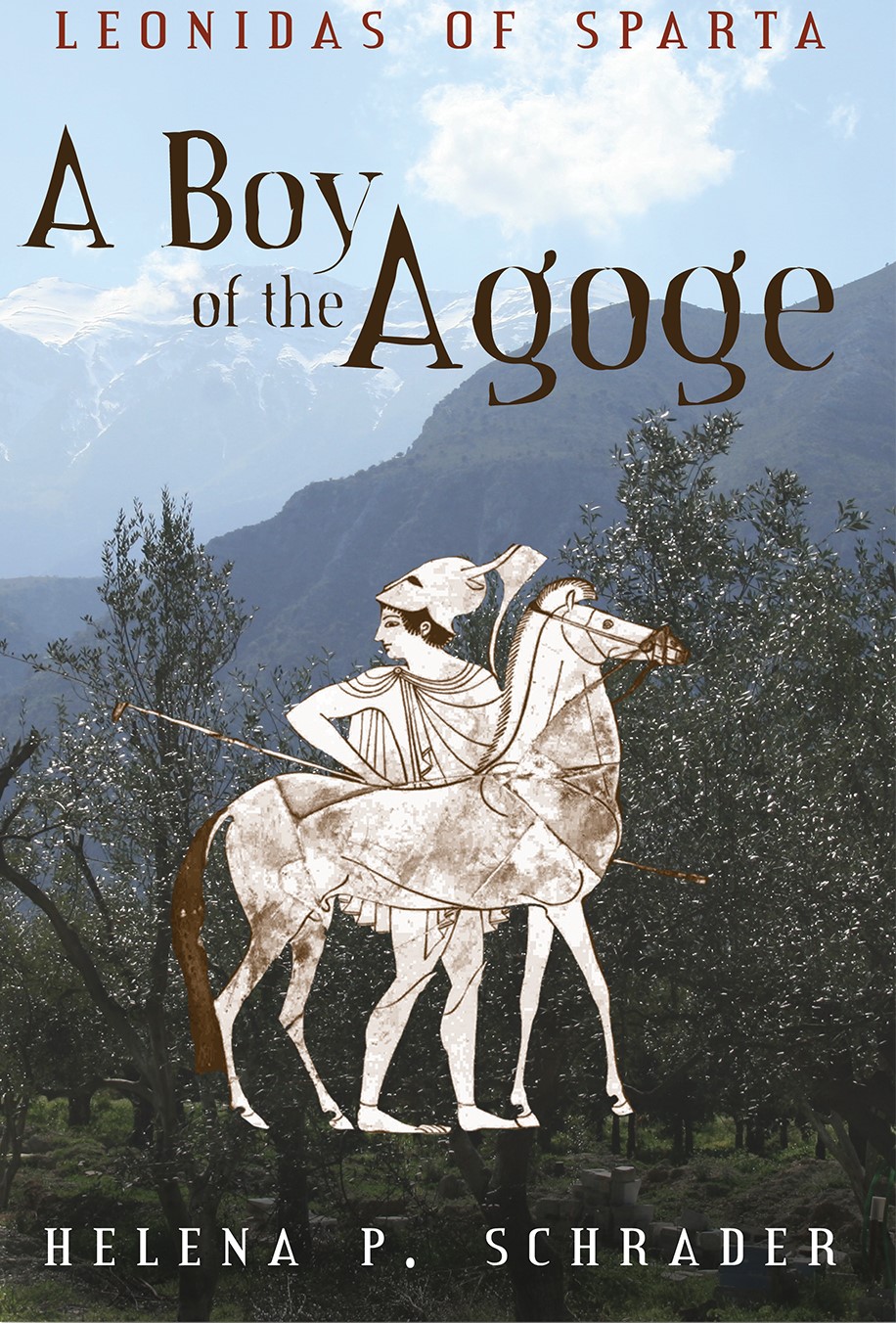
Dr Schrader does a wonderful job of telling the tail of Sparta and King Leonidas. This book, along with "A boy of the Agoge", and "Peerless Peer" are wonderful, well written books. I've read several books about ancient Greece, Sparta, and the battle at Thermopylae, and Dr Schrader has really done a great job researching the facts that make her book even better.

Dr Schrader, if you end up reading this, I hope you go on to tell what happened to Gorgo and the rest of Sparta in the years after Leonidas died. 

Note: Starting in 2013, new posts to this blog will be made monthly, rather than weekly.

Saturday, December 22, 2012

A Proto-Christian Hero

Christians are about to celebrate the birth of Christ. 2,012 years ago, in Palestine, a man was born, who preached a new religion based on love of one’s fellow man. Dramatically, however, he not only preached this message of love, he was prepared to sacrifice himself for the rest of mankind in an unprecedented manner. This sacrifice, depicted in countless works of art and on crucifixes in churches around the world, has inspired awe and wonder for two thousand years.

By the time Christ was born, the ancient city and culture of Sparta was moribund. Yes, there was still an urban community on the site of the once great capital of Lacedaemon, but of the inhabitants of this Sparta no longer lived by the laws nor fallowed the customs that that made ancient Sparta unique and great.  And yet there is a bond between Sparta and Christianity in the form of Leonidas.
Leonidas lived roughly 500 years before the birth of Christ and did not benefit from his teachings or example. Yet, while working on my three-part biography of Leonidas of Sparta, I came to realize that Leonidas fascinates us to this day not because of his historical role (he lost a battle) but as a moral figure.  It was Leonidas’ conscious decision to sacrifice himself for his fellow Greeks that made him such an appealing historical figure.  Leonidas attracts us not because he was a Spartan king, but because he was prepared to defy impossible odds for the sake of freedom.
Critical to the appeal of Leonidas is that he died fighting a defensive – not an aggressive – battle.  Equally important is the fact that he faced death consciously; Leonidas knew he was going to die, but that did not deter or even dishearten him.  Most important of all, Leonidas did not die, like Achilles or Hektor, for the sake of his own glory and even for honor, but for the lives and freedom of others.

Leonidas’ conscious decision to die in order to save Sparta from destruction was proto-Christian. His example is morally up-lifting, and his story inspirational. These, not a fascination with Ancient Sparta, are what make his story worth telling and make his story worth reading.